


News

2026/07/09
We held GTIE Demo Day 2026!
On June 8, 2026, we held a pitch event featuring research teams that were selected for the GAP Fund (**) provided by GTIE (*), a consortium of universities in the Tokyo metropolitan area, and successfully completed the program.
[ Event Overview ]
At GTIE Demo Day 2026, 23 teams that had completed the GTIE GAP Fund by the end of March 2026 took the stage. Each team presented the results of their program to date and the vision for their startups, which were conceived based on their own research.During the pitch sessions, the researchers introduced their unique technological ideas—distinctive to researchers—and the challenges they face in commercializing them, filling the venue with excitement alongside the 300 attendees.
The event also featured lectures by seasoned entrepreneurs, who shared real-life experiences of researchers taking the leap into entrepreneurship and offered concrete advice on commercialization. For participants, it was a valuable opportunity to gain a deeper understanding of the startup creation process and find inspiration for their next steps.
GTIE will continue to promote the creation of deep-tech startups that take flight from the Greater Tokyo Area to the world through support programs that back researchers’ endeavors.
*Greater Tokyo Innovation Ecosystem (GTIE) is a platform dedicated to building a university-based startup ecosystem comprising universities in the Greater Tokyo Area (***).
**The GAP Fund is a program designed to bridge the gap between basic research at universities and commercialization, and to support activities aimed at fostering university-based startups.
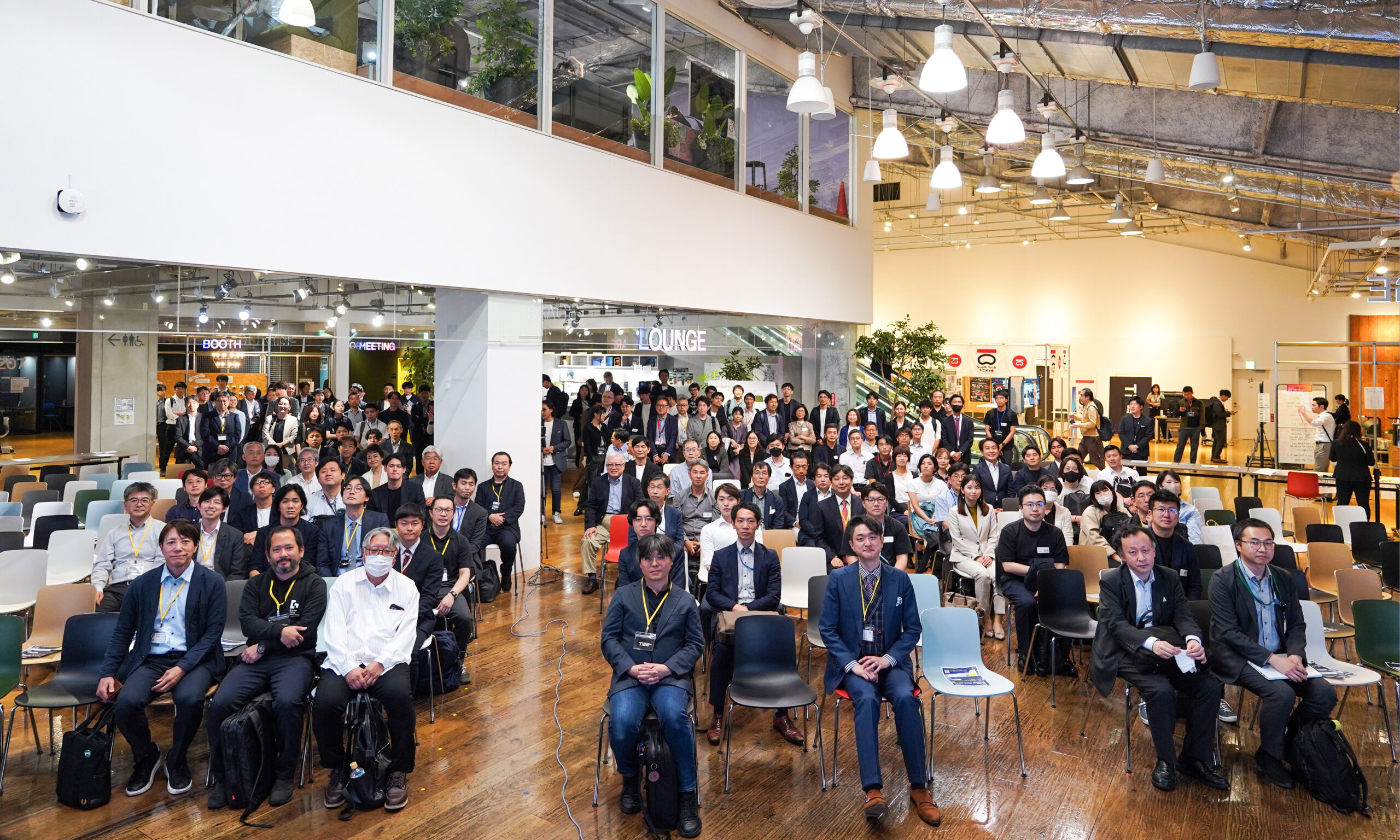
• Pitch Session
The 23 GAP Fund awardees presented their research findings and business plans, as well as updates on their entrepreneurial progress. (In order of presentation)
| Speaking Order | Name (titles omitted) | Affiliation | Project Title |
| 1 | Masatoshi Kondo | Institute of Science Tokyo | Innovative Liquid Metal Technology to Neutralize the Most Challenging Waste Facing Humanity Worldwide [Startup] |
| 2 | Nobutaka Tanaka | Ibaraki University | Proof of Concept for Digital Twin Technology to Advance Nuclear Power Plant Decommissioning Processes and Improve Decontamination and Reactor Core Dismantling Technologies [Startup] |
| 3 | Manabu Ihara | Institute of Science Tokyo | Commercialization of the World’s First Large-Capacity Energy Storage System Using CO2 and Carbon [Selected for D-Global] |
| 4 | Tetsuya Yamada | Institute of Science Tokyo | Commercialization of Ultra-Compact Solid Oxide Fuel Cells for Building a Self-Sufficient, Decentralized Energy Society |
| 5 | Hideyuki Maki | Keio University | Mass-Produced Graphene-Based Healthcare Devices: Business Operations and Global Expansion |
| 6 | Kumi Kuroda | Institute of Science Tokyo | Social Implementation of a Program and Device That Uses Physiological Data to Reduce Crying in Infants and Toddlers and Support the Bedtime Routine |
| 7 | Hiroaki Yano | University of Tsukuba | Research and Development of Technologies to Support Gait Training for Stroke Patients |
| 8 | Ryoma Ogawa | Chiba University | Commercialization of Muscle Mass and Muscle Quality Imaging Wearables for Sarcopenia Prevention [Startup] |
| 9 | Yasuo Yoshimi | Shibaura Institute of Technology | Development of a Real-Time Histamine Sensor Using Molecularly Imprinted Polymers |
| 10 | Yuta Kurashina | Tokyo University of Agriculture and Technology | Research and Development of a Core-less Drug Delivery Device Using Ultrasonic Irradiation with Superimposed Frequencies |
| 11 | Shoto Sekiguchi | Tokyo University of Agriculture and Technology | Development of an Endoscopic Biopsy Technique “Utilizing Bubble Flow” to Enable Minimally Invasive and Simple Lung Cancer Diagnosis |
| 12 | Takumi Noda | Tokyo University of Agriculture and Technology | Realization of Hands-Free Ultrasound Imaging Using a Flexible Probe |
| 13 | Ryuji Nagai | Tokai University | Development of Next-Generation Anti-Atherosclerosis Drugs Using “2SC,” a Technology for Visualizing “Hidden Inflammation” |
| 14 | Kiyotaka Iwasaki | Waseda University | Development of a 3D Structured Explanted Aortic Annulus Ring That Enables Physiological Annular Motion |
| 15 | Masayuki Umemura | The Jikei University School of Medicine | Development of a Brain Tumor Treatment Device That “Heals Using an Alternating Magnetic Field” [Selected for D-Global] |
| 16 | Junji Fukuda | Yokohama National University | Treatment of Male Pattern Hair Loss Using Extracellular Vesicles Produced by Human Hair Follicle Cells in Multilayer Culture *Project title changed |
| 17 | Takashi Shichida | Institute of Science Tokyo | Development of a Therapeutic Agent Aimed at Full Recovery of Brain Function |
| 18 | Kenji Suzuki | Institute of Science Tokyo | Development of an Integrated Diagnostic Support System Covering Rare to Common Diseases Using Small-Data AI |
| 19 | Jinichi Hirano | Keio University | Development of a Web System to Refine Depression Treatment |
| 20 | Yukikazu Ozaki | University of Tsukuba | Development of an AI Model for Detecting Corporate Accounting Fraud and Its Social Implementation |
| 21 | Satoshi Miura | Institute of Science Tokyo | A Controller for Intuitive Operation of Robots, Vehicles, and Other Systems |
| 22 | Masaki Tanabe | Shibaura Institute of Technology | Non-Destructive Terahertz Sensing of Corrosion in Steel Beneath Coatings |
| 23 | Takeshi Takaya | University of Tsukuba | Practical Application of Visual Inspection of Glossy and Transparent Objects Through the Integration of Event Cameras and Computational Imaging |
•GTIE Next Game Changer
During this event, we held a participant vote on the pitches presented by 23 speakers.
Based on the themes “Teams with the Potential to Change the World in the Next Era” and “Technologies That Will Drive Future Industries,” the following three teams were selected as the top finishers. The margins between 1st and 5th place were extremely close, reflecting the high level of anticipation surrounding these projects.
1st Place: Professor Ihara, Institute of Science Tokyo—“Practical Application of the World’s First Large-Capacity Energy Storage System Using CO₂ and Carbon” [Selected by D-Global]
2nd Place: Professor Suzuki, Institute of Science Tokyo, “Development of an Integrated Diagnostic Support System Covering Rare to Major Diseases Using Small-Data AI”
3rd Place: Professor Shichida, Institute of Science Tokyo, “Realization of Therapeutic Drugs Aimed at Full Recovery of Brain Function”
• Keynote Session
“New Innovation in Japan Pioneered by University-Based Startups: Lessons from Kyoto Fusion Engineering’s Six Years”
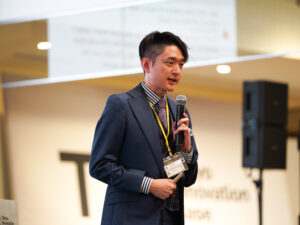
Shutaro Takeda
Associate Professor, Graduate School of Media Design, Keio University / Co-founder, Kyoto Fusion Engineering Co., Ltd.
• Panel Discussion
“Why Top Talent Chooses Startups: Challenges from Research and Growth at a Startup”
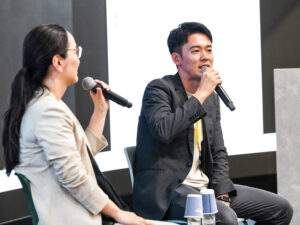
Shunichi Shiozawa
Executive Officer and CTO, Terra Drone, Inc.
•Opening Remarks
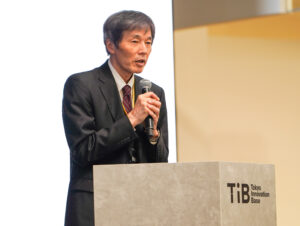
Mr. Tetsuji Furukawa
Institute of Science Tokyo, Board Member and Vice President (in charge of Innovation)
• Introduction to GTIE Activities
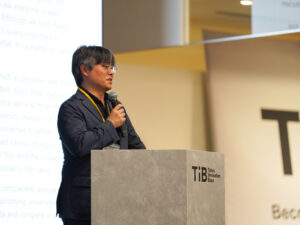
Mr. Masaharu Tsujimoto
Assistant Director, Innovation Design Organization, Institute of Science Tokyo
•Closing Remarks
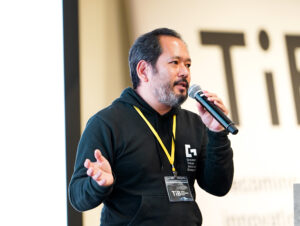
Mr. Hiroyuki Ishii
Director, Entrepreneurship Center, Waseda University
• Networking (Intermission Remarks)
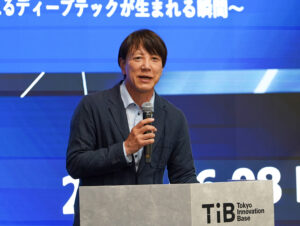
Mr. Takeo Nakajima
The University of Tokyo, Headquarters for Industry-Academia Collaboration
• VC Matchmaking
In an adjacent venue, a matching event was held, primarily featuring the speakers, researchers selected for the GTIE GAP Fund, and venture capital firms that are candidates to serve as GTIE commercialization promotion organizations.